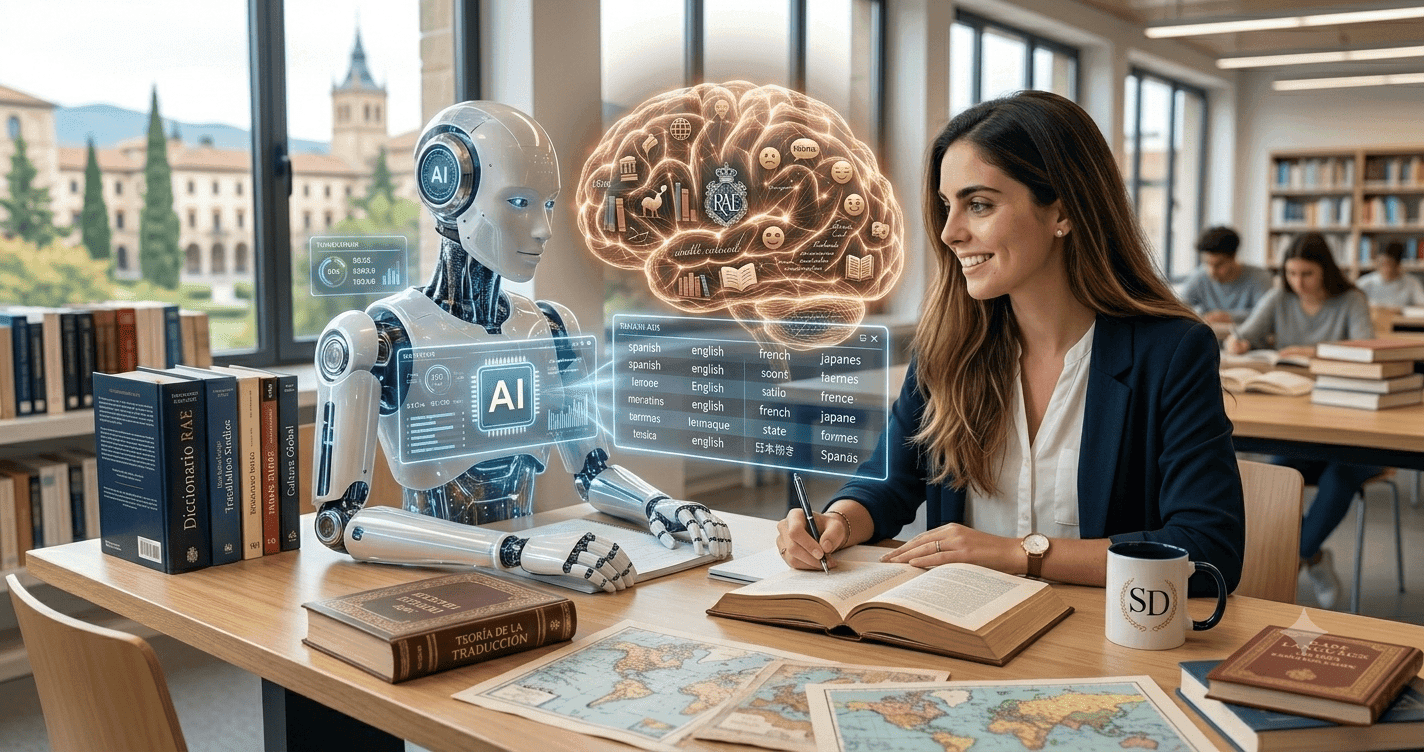
Human Translation vs. AI: What Does Your Business Need to Succeed?
We analyze when to use artificial intelligence and when to rely on human translation to protect your business reputation and quality.
The Rise of AI in Translation: Revolution or Complement?
Artificial intelligence has radically transformed the language sector in recent years. With the widespread adoption of tools like ChatGPT, DeepL, and advanced neural machine translators, many companies are questioning whether it is still necessary to hire professional translation services. The answer is not a simple "yes" or "no," but rather a matter of strategy and purpose.
1. When Is Artificial Intelligence Sufficient?
AI is a formidable tool for specific scenarios where speed and cost take precedence over literary style or absolute legal precision. We can say that machine translation is sufficient for:
- Internal company use: Working documents, meeting minutes, or informal emails where the goal is rapid comprehension.
- Massive data volumes: When you need to analyze thousands of lines of text (such as Big Data or technical logs) to extract general insights.
- Quick drafts: Gaining a general idea of a foreign document's content to decide if it is worth translating formally later on.
2. The Irreplaceable Value of Human Translation
When we move beyond internal use and enter the realm of external communication—websites, marketing brochures, legal contracts, or financial reports—AI reveals its limitations. This is where a professional translator provides what a machine still cannot replicate:
Cultural Context and Sensitivity
Language is a reflection of culture. An advertising slogan that works in Spain may be offensive or nonsensical in another country. A human translator performs transcreation, adapting the message not just to be understood, but to evoke emotion and connect with the local audience, avoiding cultural pitfalls that could damage your brand image.
Legal and Technical Precision
In legal or medical fields, a misinterpretation caused by AI can have serious consequences. Professional translation guarantees that every term is aligned with local regulations—something machines, lacking ethical and legal responsibility, cannot ensure.
Brand Voice
AI often leans toward a robotic neutrality that dilutes your company's identity. Professional translation maintains the tone, style, and communicative intent, ensuring that your message sounds just as coherent in London, Madrid, or New York.
3. The Hybrid Solution: Machine Translation Post-Editing (MTPE)
Today, many projects require a mixed approach. Post-editing is a service where a machine generates an initial translation and a professional translator steps in to review, polish, and ensure the text is natural, precise, and accurate. It is the best way to optimize budgets without sacrificing final quality.
Conclusion: Quality, the Gold Standard
Do not risk the reputation you have worked so hard to build. AI is an excellent assistant, but a poor decision in your international communication strategy can prove very costly in the long run. If your goal is excellence, human translation remains the fundamental pillar that guarantees trust and authority.
Do you want to know which option is best for your next project?
Boost Your Brand with My Expertise
Discover the range of services I offer to help your brand grow, connect with your audience, and achieve your business goals. Each solution is tailored to your needs.
Looking for a freelance translator? Let's Discuss